Opinion · 5 min read
Is it OK to use AI to apply for jobs? Where the ethical line sits
Yes, with conditions. Where the ethical lines actually sit, what employers already do with AI, and what recruiters actually object to.

Published · Updated
Yes — it is OK to use AI to apply for jobs, as long as two things stay true: the facts in the application are yours, and you supervise what goes out under your name. Break either of those and the problem isn't the AI; it's the dishonesty.
That's the short answer, and we'll defend it properly below. We build an AI application tool, so we have an obvious interest here — which is exactly why we'd rather argue the position carefully than pretend the question doesn't exist. Using AI to apply for jobs sits in genuinely new ethical territory, and "everyone's doing it" is not an argument. Neither is "it feels like cheating." So let's take the real objections one at a time.
Is using AI to apply for jobs cheating?
Cheating means misrepresentation — presenting an ability, a history, or a credential you don't have. An AI tool that copies your real employment history into a career-site form misrepresents nothing. It's doing clerical work: the same facts, the same person, less typing. The line gets crossed when the tool starts inventing — a degree you never earned, a skill you don't have, an employer you never worked for. That's cheating whether an AI wrote it or you did.
It helps to remember how much assistance hiring has always tolerated. Professional CV writers have existed for decades. Career coaches rehearse candidates for interviews. Friends proofread cover letters; referrals skip the queue entirely. Nobody calls a professionally edited CV cheating, because the underlying facts still belong to the candidate. AI-assisted applications belong in the same category — provided the assistance stays clerical and editorial, and never becomes fictional.
Do employers already use AI in hiring?
Extensively. A ResumeBuilder.com survey of 948 business leaders, run in October 2024, found that more than half of companies (51%) were already using AI in hiring, most often to review resumes, and that 68% expected to be using it by the end of 2025. If your last few applications were rejected quickly, there is a reasonable chance no human being ever read them.
Here is where we want to be careful, because the obvious next move is the lazy one: "they screen with AI, so candidates can do whatever they like." That's not an argument — two sides behaving badly doesn't make either side right. The honest version of the symmetry point is narrower: automation is now the ordinary condition of hiring, on both sides of the table. A candidate typing identical answers into their fortieth identical form isn't having a rich human experience that AI would cheapen; they're feeding one automated system by hand. Using a tool to do that mechanical layer isn't an ethical breach. It's a response, in kind, to how hiring actually works now — and the ethics live in how each side uses its tools, not in whether they use them.
What do recruiters actually think about AI applications?
Recruiters are not a monolith, and we won't invent a statistic to flatten them into one. But if you read what they say publicly, their complaints cluster in a consistent place — and it isn't "a machine filled in this form." The complaints are about floods of identical, untargeted applications; about answers that clearly weren't read before submission; about fabricated experience surfacing at the interview stage. In other words, recruiters object to spam and to lying. Those problems predate AI. AI just made them cheaper to produce at volume.
That distinction is worth sitting with, because it tells you what actually matters: relevance and truth. An accurate application to a role you genuinely fit, written in your own tone, does not become offensive because software moved the text into the boxes. A fabricated application does not become acceptable because a human typed it slowly.
The tool was never the ethical question. Honesty is the ethical question — and honesty survives automation just fine.
Where the ethical line actually sits
If you want the position as a checklist, here is ours.
- 01Fine: using AI to fill forms with your real details, tailor the emphasis and phrasing of true experience, find roles that match your CV, and draft answers you review before or after they go out.
- 02Fine: automating volume you would honestly stand behind — every application one you'd be glad to interview for.
- 03Not fine: letting AI invent degrees, employers, skills, or achievements — tailoring is emphasis, not creation.
- 04Not fine: having AI impersonate you in a live assessment or interview that is meant to test you personally.
How this shaped the way Aplies works
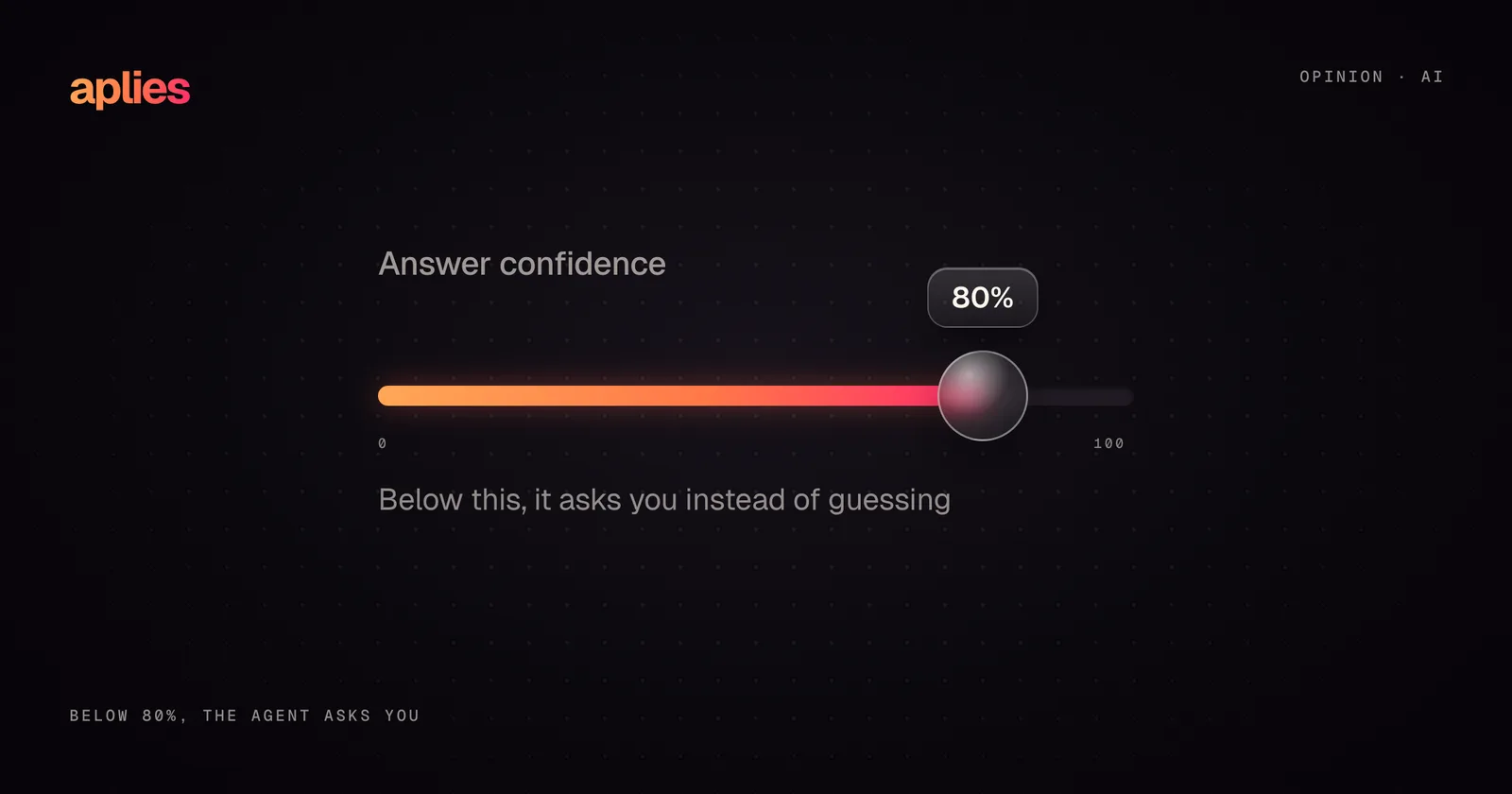
Here is how that standard shows up in the product. Aplies is a Chrome extension that applies to LinkedIn jobs on your behalf — Easy Apply and external career-site forms — and it answers from your CV and the answers you saved. It never makes up personal facts such as your date of birth, gender or nationality, and it stops to ask you when it isn't sure of an answer. You start it yourself or schedule it, you can watch any run in its own tab and stop it at any moment, and every answer it gave is in its Application Report for you to check. The full mechanics are on how it works, and the documentation sets out the rules it follows.
The economics follow the same logic: every application has a posted credit price, charged only when it is submitted, and every fee is listed on the pricing page. New accounts get 5 free credits, once their phone is verified, to test the claim.
So — is it OK to use AI to apply for jobs? Yes, if the facts are yours and the supervision is yours. That standard is demanding enough to rule out the behavior recruiters rightly resent, and reasonable enough that you don't have to hand-type your own employment history forty times to stay ethical. Hold yourself to it, and hold your tools to it too.
Related guides
Guide ·
Your LinkedIn profile before you apply: what recruiters see
What recruiters see when you apply on LinkedIn, the profile fixes that matter before you send applications, and how to keep your profile and CV telling one story.
Guide ·
After the application: how to prepare for a first interview
How to prepare for a first interview after you apply: reread what you sent, choose your stories, research the role, and plan the questions worth asking.
Explainer ·
Why you're not hearing back from LinkedIn applications
Silence after a LinkedIn application is usually volume, timing, or parsing — not a verdict on you. Here's what's actually happening, and what helps.